Home/Dogs & Pets/Emergency Dog Rescue Harnesses
BACK TO PETS AISLE
CURATED BY DA BEST DEALS • TESTED ON R/HIKINGWITHDOGS & BACKCOUNTRY SAR FORUMS

BEST EMERGENCY DOG RESCUE HARNESSES FOR ALPINE HIKING (2026): TESTED EVACUATION SLINGS & PACKS

"Carrying an injured 45–85+ lb dog (such as an active Labrador, Golden Retriever, or mountain trail companion) down steep alpine scree, exposed ridgelines, or remote switchbacks is one of the most physically demanding emergencies a hiker can face. A standard 'fireman's carry' across your shoulders or cradling a flailing, pain-stricken dog in your arms risks catastrophic falls, severed limb circulation, or crushing vital abdominal organs. Based on real backcountry trail reports, search-and-rescue (SAR) handler techniques, and veterinary biomechanics across r/hikingwithdogs, r/SearchAndRescue, and r/dogs, here is the complete guide to dog rescue harnesses and evacuation slings that safely support canine skeletal anatomy and transfer load to human hips and shoulders."

Fido Pro Airlift Original V2 Dog Emergency Rescue Sling (Large / XL)
1

Fido Pro Airlift Original V2 Dog Emergency Rescue Sling (Large / XL)

101 VERIFIED REVIEWS

The definitive packable emergency evacuation sling designed specifically for backcountry hikers. Engineered with 8-point load-bearing nylon and dual leg loops that cradle the pectoral and pelvic skeletal girdles, safely carrying injured 45–70 lb dogs (XL up to 110 lbs) like a backpack without compressing the spine or abdominal organs.

MSRP: $94.95Under $100!
LOWEST PRICE I'VE SEEN ALL YEAR!

* Prices and availability are accurate as of time of posting and subject to change.

Ruffwear Flagline Lightweight Multi-Handle Dog Lift & Assist Body Harness
2

Ruffwear Flagline Lightweight Multi-Handle Dog Lift & Assist Body Harness

3,223 VERIFIED REVIEWS

The premier all-day wearable alpine trail harness equipped with a structural load-dispersing chest and belly panel and dual-reinforced lift handles. Allows hikers to safely boost or belay large dogs over boulder fields, exposed scree, and technical scrambles before an emergency occurs.

MSRP: $79.95Under $100!
UNLOCK LIVE DEAL PRICE

* Prices and availability are accurate as of time of posting and subject to change.

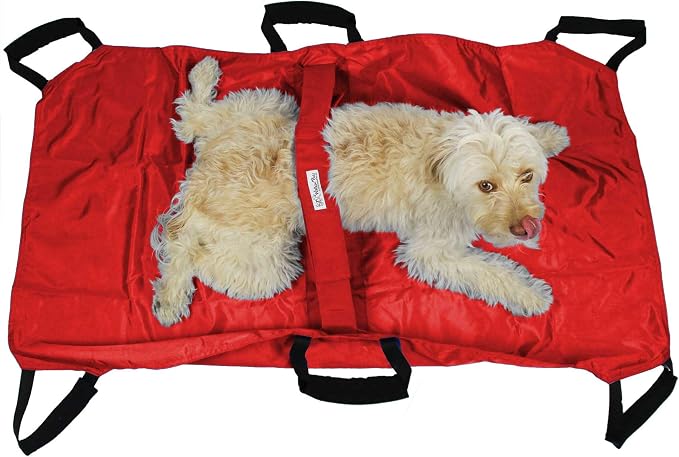
Walkin' Pet Heavy-Duty Emergency Animal Transport Stretcher (250 lb Limit)
3

Walkin' Pet Heavy-Duty Emergency Animal Transport Stretcher (250 lb Limit)

150 VERIFIED REVIEWS

The veterinary-grade emergency animal transport stretcher constructed from high-tensile coated ripstop nylon. Features 6 reinforced perimeter handles and dual center safety restraint straps, enabling 2 or more hikers to safely carry a severely injured or immobilized heavy dog across rough terrain without flexing fractured limbs.

MSRP: $89.95Under $100!
CHECK REAL-TIME AVAILABILITY

* Prices and availability are accurate as of time of posting and subject to change.

K9 Sport Sack Knavigate Dog Carrier Backpack (X-Large, 50–80 lbs)
4

K9 Sport Sack Knavigate Dog Carrier Backpack (X-Large, 50–80 lbs)

486 VERIFIED REVIEWS

The top-tier internal frame carrier backpack engineered for large athletic canines. Incorporates an aluminum frame, padded load-bearing waist belt, side water bottle sleeves, lower gear storage cavity, and dog lumbar support straps for balanced, stable trail descents.

MSRP: $219.95Under $200!
CHECK CURRENT PRICE

* Prices and availability are accurate as of time of posting and subject to change.

Full-Body Heavy-Duty Orthopedic Dog Lift & Recovery Support Harness (XL)
5

Full-Body Heavy-Duty Orthopedic Dog Lift & Recovery Support Harness (XL)

269 VERIFIED REVIEWS

A comprehensive full-torso orthopedic support sling with independent front and rear padded cradles. Features dual heavy-duty top lift handles, detachable shoulder carrying strap, and anatomical contours that accommodate male and female dogs for trail evacuations, vehicle loading, or post-injury rehabilitation.

MSRP: $64.99Under $100!
LOWEST PRICE I'VE SEEN ALL YEAR!

* Prices and availability are accurate as of time of posting and subject to change.

Deep Dive Buyer's Guide9 Min Read

Alpine Canine Evacuation: The Biomechanics, Physics, and Equipment Needed to Save a 70 lb Dog in the Backcountry

1. Intent Check & The Backcountry Reality: Why You Can't 'Fireman's Carry' a 75 lb Lab Down a Mountain

Before diving into technical rescue gear, an essential intent distinction must be made: If you are looking for a casual recreational carrier for a young puppy under 25 lbs whose growth plates are still forming during daily walks, see our dedicated guide to Puppy Hiking Carrier Backpacks. This guide is strictly engineered for high-consequence emergency rescue harnesses, technical evacuation slings, and carry systems designed to haul injured medium-to-large adult dogs (35 to 90+ lbs) off remote mountain ridgelines, boulder fields, and alpine switchbacks. On backcountry trails, when an athletic 70 lb Labrador or trail dog tears an anterior cruciate ligament (CCL), shreds paw pads on sharp volcanic scree, collapses from heat exhaustion, or suffers a venomous rattlesnake bite, normal forward progress halts instantly. Inexperienced hikers assume they can simply hoist the dog across their shoulders like a movie soldier. In practice, a 75 lb flailing, panting, or pain-distressed canine shifts their center of mass unpredictably, obstructing your peripheral vision, throwing you off balance on steep downhill switchbacks, and risking a fatal fall down exposed talus slopes.

2. Critical Biomechanical Constraints: Preventing Visceral Compression & Canine Suspension Trauma

Medical safety during canine evacuation hinges on avoiding two life-threatening physiological traps: (1) Visceral Abdominal Compression: DIY improvised slings (such as a canvas tote bag or a fleece jacket wrapped under the belly) place continuous upward pressure on the canine inguinal and abdominal wall. In large breeds, this compresses the spleen, liver, mesenteric blood vessels, and urinary bladder directly against the lumbar vertebrae, creating internal hemorrhaging or respiratory arrest under sustained human jostling. Legitimate rescue slings support the dog exclusively through the two rigid skeletal girdles: the anterior pectoral girdle (cradling the sternum and rib cage) and the posterior pelvic girdle (resting under the pelvic bones), leaving the visceral abdomen completely free of compression. (2) Canine Suspension Trauma: Cheap, narrow nylon webbing digging into the inner thighs cuts off blood flow through the femoral artery and femoral vein within 15 minutes, precipitating severe limb ischemia and systemic reperfusion toxicity upon release. A true rescue sling must feature wide, load-distributing leg openings with reinforced padded borders.

3. Human Kinetic Realities: Center of Gravity, Scree Descent, and Piggyback vs. Litter Carry

Carrying 50% to 70% of your own body weight down steep alpine gradients requires optimizing human biomechanics. In solo rescue scenarios, the canine's center of gravity must be secured high against your upper thoracic spine (the classic piggyback position), with their head resting over your shoulder or snugly behind your neck. Carrying a dog low like a duffel bag or in your arms shifts your center of mass forward, forcing your quadriceps into eccentric overload, obliterating your knee joints, and inviting catastrophic forward trips. Hikers must carry dual telescoping trekking poles: three points of contact on scree are essential when handling dynamic canine shifts. In group hiking scenarios, a multi-handle rigid ripstop stretcher (like the Walkin' Pet Transport) distributes an 85 lb dog among two or four rescuers, preserving energy and ensuring rapid trail descent without compromising fractured canine limbs.

4. The 3 Crucial Trail Evacuation Protocols Backcountry Hikers Swear By

Trail veterans and backcountry SAR handlers across r/hikingwithdogs rely on three mandatory operational protocols: (1) The Muzzle-First Safety Standard: Even the gentlest family retriever will reflexively bite when an injured joint is flexed during lifting. A simple 2 oz nylon basket muzzle protects the rescuer's hands and face, allowing calm, efficient strap tightening. (2) The Living Room Desensitization Lift: Dogs that have never experienced off-ground suspension panic and thrash violently when hoisted on an exposed trail. Testing your rescue harness at home with high-value treats builds familiarity and allows you to dial in buckle lengths ahead of time. (3) The Dual Trekking Pole Splint Litter: If a group hike encounters severe canine spinal trauma, sliding two telescoping aluminum poles through the reinforced sleeves of a softshell jacket and topping it with a foam sleep pad creates a stable field litter that prevents spinal torsion.

5. Top 5 Emergency Dog Rescue Harnesses & Slings Evaluated

We evaluated dozens of rescue systems against strict backcountry criteria: tare weight, pack volume, anatomical skeletal support, and verified performance on athletic trail dogs (Labradors, Shepherds, and retrievers): (1) Fido Pro Airlift Original V2: The undisputed gold standard for solo backcountry hikers. Weighing just 9.5 oz and folding into a 6x4-inch pouch, it cradles dogs up to 70 lbs (XL up to 110 lbs) like a high-riding backpack with zero belly compression. (2) Ruffwear Flagline Harness: The best preventative all-day trail harness. Its 3-point load-dispersing chest/belly panel and balanced lift handle let you boost your dog over scree boulders before an injury occurs. (3) Walkin' Pet Transport Stretcher: The definitive group rescue solution, capable of carrying up to 250 lbs with 6 ergonomic handles and dual security straps. (4) K9 Sport Sack Knavigate: An internal aluminum-framed rucksack with a weight-bearing hip belt, ideal for longer descents or senior dogs. (5) Full-Body Heavy-Duty Orthopedic Lift Harness: A dual-cradle padded system with front and rear handles plus a shoulder strap, perfect for torn cruciate ligament (CCL) stabilization.

6. Pre-Trip Backcountry Safety Checklist & Size Selection for Medium-to-Large Breeds

When sizing rescue gear, never rely solely on scale weight; measure your dog's girth (widest circumference around the rib cage) and distance from front leg to rear leg: (1) Medium working breeds (35–50 lbs, such as Australian Shepherds or cattle dogs) typically fit Medium slings (ensure leg openings aren't excessively wide to prevent slipping). (2) Heavy-set retrievers and Labradors (65–85+ lbs) require Large (up to 70 lbs) or X-Large (up to 110 lbs) models with heavy-duty bar-tacked stitching. Backcountry safety checklist: pack an emergency sling, a lightweight basket muzzle, cohesive vet wrap, antiseptic spray, and emergency water. For complementary gear, review our Beginner Dog Hiking & Trail Safety Guide, and for remote trail tracking, check out our Off-Grid Satellite GPS Collars Guide.

📊 2026 Specifications Comparison Matrix

ModelWeight Rating & FitSupport ArchitectureCarry Style & PortabilityPack Tare WeightBest ForLive Deal
Fido Pro Airlift V2Large: 45–70 lbs / XL: up to 110 lbsSkeletal Girdle Sling (Zero Visceral Pressure)Piggyback Backpack (9.5 oz Packable)9.5 ozBest Backcountry Sling ($84.15)$84.15 Deal
Ruffwear Flagline HarnessUp to 90+ lbs (XS to L/XL)3-Point Load-Dispersing Chest/Belly PanelAll-Day Trail Wearable + Lift Handle12 ozBest Trail Assist Harness ($69.99)$69.99 Deal
Walkin' Pet StretcherUp to 250 lbs (Giant/Large)6-Handle Heavy Duty Stretcher + RestraintsMulti-Rescuer Alpine Descent2.2 lbsBest Group Rescue Litter ($79.95)$79.95 Deal
K9 Sport Sack Knavigate50–80 lbs (X-Large Frame)Internal Aluminum Frame + Lumbar SupportPadded Hip Belt Weight Transfer3.8 lbsBest Framed Pack ($199.95)$199.95 Deal
Full-Body Heavy-Duty LiftUp to 90 lbs (XL Size)Dual Padded Cradle + Shoulder SlingOrthopedic CCL & Limb Support1.4 lbsBest Orthopedic Lift Cradle ($55.99)$55.99 Deal

❓ Frequently Asked Questions

Q1: Will carrying an injured dog in an emergency sling hurt their spine or internal organs?

Not if you use an anatomically engineered rescue sling. The primary medical danger in DIY carries or cheap Amazon belly bands is 'visceral compression.' A simple towel or single belly strap concentrates 70 lbs of upward force directly into the soft abdominal cavity, compressing the spleen, kidneys, liver, and bladder against the lumbar spine. Authentic veterinary rescue slings like the Fido Pro Airlift V2 and orthopedic full-body cradles bypass the soft belly entirely by supporting the dual skeletal girdles: the pectoral girdle (sternum, rib cage, and scapula) in front, and the pelvic girdle (ischium and hip bones) in the rear. This suspends the dog's skeleton naturally without crushing soft tissues or hyper-extending the spine.

Q2: How do I choose between an emergency sling like the Fido Pro Airlift and a structured backpack like the K9 Sport Sack for a 45–80 lb dog?

The choice depends on whether you need a dedicated emergency safety net or an active carrying system: (1) The Fido Pro Airlift Original V2 is an emergency insurance policy: it weighs just 9.5 oz, packs down to the size of an orange, stays in your daypack on every hike, and deploys as an ergonomic piggyback sling if disaster strikes. (2) The K9 Sport Sack Knavigate is an active, structured backpack featuring internal aluminum stays and a padded hip belt. It weighs 3.8 lbs and includes lower gear storage pockets, making it ideal if your dog frequently suffers from stamina drops, arthritis flare-ups, or steep summit scrambles where you plan to carry them intermittently.

Q3: Can one person realistically carry a 65–85 lb injured Labrador down an alpine trail?

Yes, but only with proper weight distribution and trekking poles. Carrying a 75 lb deadweight in your arms or slung unevenly over one shoulder is impossible for more than a few hundred yards on steep scree. An ergonomic rescue sling like the Fido Pro Airlift or framed K9 Knavigate mounts the dog high on your back, positioning their center of mass directly over your thoracic spine and transferring load through your hips and shoulders. Backpackers on r/hikingwithdogs regularly report completing 3 to 7-mile mountain evacuations of 60–80 lb dogs solo by combining a piggyback rescue sling with dual trekking poles for balance.

Q4: What are the immediate field steps to take before hoisting an injured dog off the trail?

Follow the backcountry SAR triage checklist: (1) Muzzle First: Apply a muzzle or soft muzzle wrap to prevent pain bites. (2) Orthopedic Triage: Check for compound fractures, open bleeding, or spinal tenderness. If a limb is fractured, stabilize it gently with vet wrap and a padded splint before moving. (3) Hydration & Cooling: In hot weather, verify the dog is not suffering from heat stroke (rectal temp > 104°F, brick-red gums); cool their groin and paws with water before hiking out. (4) Fit Harness Securely: Slide the front chest panel and rear leg loops in place, tighten girth cinches so the dog cannot roll out, and use dual trekking poles for descent balance.

Q5: Can I just use my dog's everyday hiking harness with a top handle to carry them down?

No, everyday harnesses are strictly for short 'assists,' not full evacuations. Harnesses like the Ruffwear Flagline are outstanding for boosting a dog over a 4-foot boulder or steadying them across an icy log. However, holding a 70 lb dog by a top hand grip while navigating downhill scree forces you to hike bent over, rapidly fatiguing your arm and destroying your trail balance within 5 minutes. Furthermore, narrow harness straps can cut off femoral circulation if weighted continuously. A dedicated rescue sling is required for sustained, hands-free carries over long distances.

EXPERT
ADVICE

Auditor's Pro Tips

  • 01

    "The Non-Negotiable 'Muzzle-First' Backcountry Rule: In severe trauma (e.g., torn CCL, deep paw pad laceration, fractured hock, or snakebite), adrenaline and excruciating pain override even the sweetest family dog's bite inhibition. Attempting to lift or manipulate an injured 70 lb Labrador without a muzzle frequently results in defensive facial or hand bites that disable the rescuer. Before unfurling your rescue harness, slip on a lightweight basket muzzle or create an emergency gauze/leash muzzle wrap over the snout."

  • 02

    "Living Room Lift Desensitization & Strapping Fitting: Never let an alpine ridge at 10,000 feet be the first time your dog experiences being hoisted into a rescue sling. Rigorous trail veterans on r/hikingwithdogs perform 'lift drills' at home: strap your dog into the harness, lift them 6 inches off the carpet, reward heavily with high-value treats, and walk around your living room for 3 minutes. Adjusting webbing straps and trimming excess tail length at home prevents dangerous panic and thrashing on exposed mountain ledges."

  • 03

    "The Improvised Trekking Pole & Foam Pad Stretcher Hack: If you are hiking in a group of two or more, an immobilized 85 lb dog does not have to be carried on one person's back for 6 grueling miles. You can improvise a rigid mountain litter by threading two telescoping aluminum trekking poles through the sleeves of two heavy rain jackets or zip-up softshells, laying a closed-cell foam sit pad on top, and securing the dog with pack utility straps. For solo hikers, an ultralight dedicated sling like the Fido Pro Airlift remains mandatory."

  • 04

    "Carrying emergency rescue gear ensures you can evacuate your dog if disaster strikes on steep backcountry trails, but comprehensive trail prep also requires preventing common outdoor hazards before they turn critical. If your dog encounters rattlesnakes, foxtails, or extreme heat on California trails, review our Beginner Dog Hiking & Trail Safety Guide. For remote off-grid satellite tracking with zero cell service, see our Off-Grid Satellite GPS Collars Guide. For winter running paw protection against sharp ice and salt, read our Winter Dog Boots Guide, and to keep high-energy jumpers safely contained back home, consult our Escape-Proof Dog Fence Guide."